
Blade Signs — Perpendicular Projecting Signs Built for Walking Traffic
Double-sided signs that project perpendicular to your facade so pedestrians see you from both directions of the sidewalk. Designed, fabricated, and installed in-house — from classic decorative scrollwork to clean modern brackets — for boutique retail, cafés, and historic-district storefronts across Los Angeles.
What Are Blade Signs?
A small double-sided sign mounted perpendicular to the building face — the oldest and most effective way to catch the eye of someone walking down the block. Visible from both directions, architectural in feel, and loved by landlords in pedestrian corridors.
Anatomy of a blade sign
Every part carries wind load and the weight of a double-sided face. We engineer each of the four components for your wall type before a bracket ever touches the stucco.
-
1
Wall mount bracket
Steel mounting plate anchored into studs, blocking, masonry, or concrete. Sized for the wall material and engineered wind load.
-
2
Horizontal support arm
Powder-coated steel or aluminum arm — straight modern, decorative scroll, or flag-mount — projecting 18"–60" from the wall.
-
3
Double-sided panel
Aluminum, HDU, or illuminated acrylic face with identical graphics on both sides. Readable from both walking directions.
-
4
Reinforced hanging hardware
Rated chain, rigid pins, or welded loops sized to the panel weight. Includes anti-sway hardware where codes require it.
What Blade Signs Cost in LA
Case-by-case — we quote firm after a site visit or artwork review.
Pricing is case-by-case. Every blade sign project is custom — panel size, illumination type, bracket style, wall construction — all affect cost. We provide a firm quote after a site visit or artwork review.
Permits are a fixed $1,500 — our flat fee for permit runners, drawings, and city coordination. City fees (plan check, inspection, use permits) are billed at cost with zero markup and paid directly by the client. See Sign Permits for the full policy.
Production itself runs 2–3 weeks once permits are approved; see the timeline below for the full project duration. Complex fabrication may add time; we tell you upfront.
Three Ways to Hang a Blade Sign
Bracket choice drives the character of the whole sign. We pick the style based on your facade, your brand, and what the city or historic board will actually approve.
Fixed-Arm Bracket
Clean modern perpendicular arm welded to a rigid mounting plate. The standard for contemporary retail, offices, and fast-casual restaurants. Minimal sway, maximum clarity.
Decorative Scroll Hanger
Ornamental ironwork arm with hanging hardware — the classic look for historic districts, old-town blocks, boutique hotels, and vintage-themed storefronts. Hand-forged options available.
Flag-Mount (Flush-to-Wall)
Panel mounts directly against the building edge and reads like a flag unfurled. Low profile, narrow projection — the right call for tight sidewalks, shallow setbacks, and code-restricted corridors.
Concept to Hung Sign in 4 Steps
Every blade sign follows the same predictable workflow. You always know what stage you're in and what's next.
Design & Survey
Facade measurements, wall-type assessment, bracket style selection, and a photoreal rendering on your actual building.
Permit & Approvals
Wet-stamped engineering, city submittal, historic/BID design review where applicable, and landlord sign-off.
Fabrication
Bracket weld/fab, panel build, powder-coat or paint, LED wire if illuminated, and QA — all in our Gardena shop.
Install & Inspection
Licensed crew, anchor drill, bracket set, panel hang, electrical tie-in, city sign-off — usually a single afternoon.
Six Reasons Pedestrian Streets Love Them
Walking-Traffic Capture
Perpendicular orientation means you're visible from 100+ feet in either direction down the sidewalk — not just to people standing directly in front.
Double-Sided Visibility
One sign, two full-sized faces. Your brand reads identically from both walking directions without needing a second install.
Historic-District Friendly
The sign type design-review boards actually approve. Abbot Kinney, Old Town Pasadena, Melrose, and DTLA Arts District all love them.
Architectural Character
Blade signs add craftsmanship to a block — the kind of signage photographers and Instagrammers actually shoot. Retail real-estate agents notice.
Fast Turnaround
Smaller footprint than a channel-letter set, fewer permit hurdles, simpler install — most blade signs ship in 3–6 weeks from sign-off.
Landlord & Budget Friendly
Lower square-foot permit counts and simpler facade work usually mean faster approvals and a smaller total project cost than full facade signage.
Businesses That Live on Blade Signs
Boutique Retail
Walkable shopping streets rely on blade signs to turn foot traffic into customers — the faster someone notices you, the faster they walk in.
Cafés & Coffee Shops
The original blade-sign use case. Specialty coffee, pastry shops, and breakfast cafés use them to broadcast "we're here" down the block.
Bookstores & Galleries
Independent bookstores, gallery spaces, and record shops — the small-footprint signage that matches the independent-retail vibe.
Historic-District Businesses
Old Town Pasadena, San Pedro, Pomona Antique Row, Culver City historic core — businesses whose permit specifically requires a blade sign.
Barber Shops & Salons
The classic barber pole is a blade sign. Modern grooming lounges and salons keep the tradition — it's the signage customers expect.
Neighborhood Pharmacies & Clinics
Independent pharmacies, urgent-care offices, and dental practices on neighborhood streets — blade signs drive walk-in trust.
When a Blade Sign Is — and Isn't — Your Best Choice
We build every sign type. Here's an honest look at when blade wins and when another option fits your building better.
Choose a blade sign if Yes
- Your storefront is on a walkable, pedestrian-heavy street.
- You want to be read from both walking directions — one sign, two full faces.
- You're in a historic or design-review district that favors projecting signs.
- You want architectural character that adds craftsmanship to the block.
- You want a smaller, budget-friendlier project than full facade signage.
Consider another option if Maybe not
- You need maximum facade branding — see channel letters.
- You want an advertising surface on the glass itself — see window graphics.
- You want a simple backlit wall panel — see cabinet signs.
- You're on a freestanding lot or highway frontage — see monument or pylon.
- You want vintage glass glow — see custom neon.
Blade Sign Projects We've Built
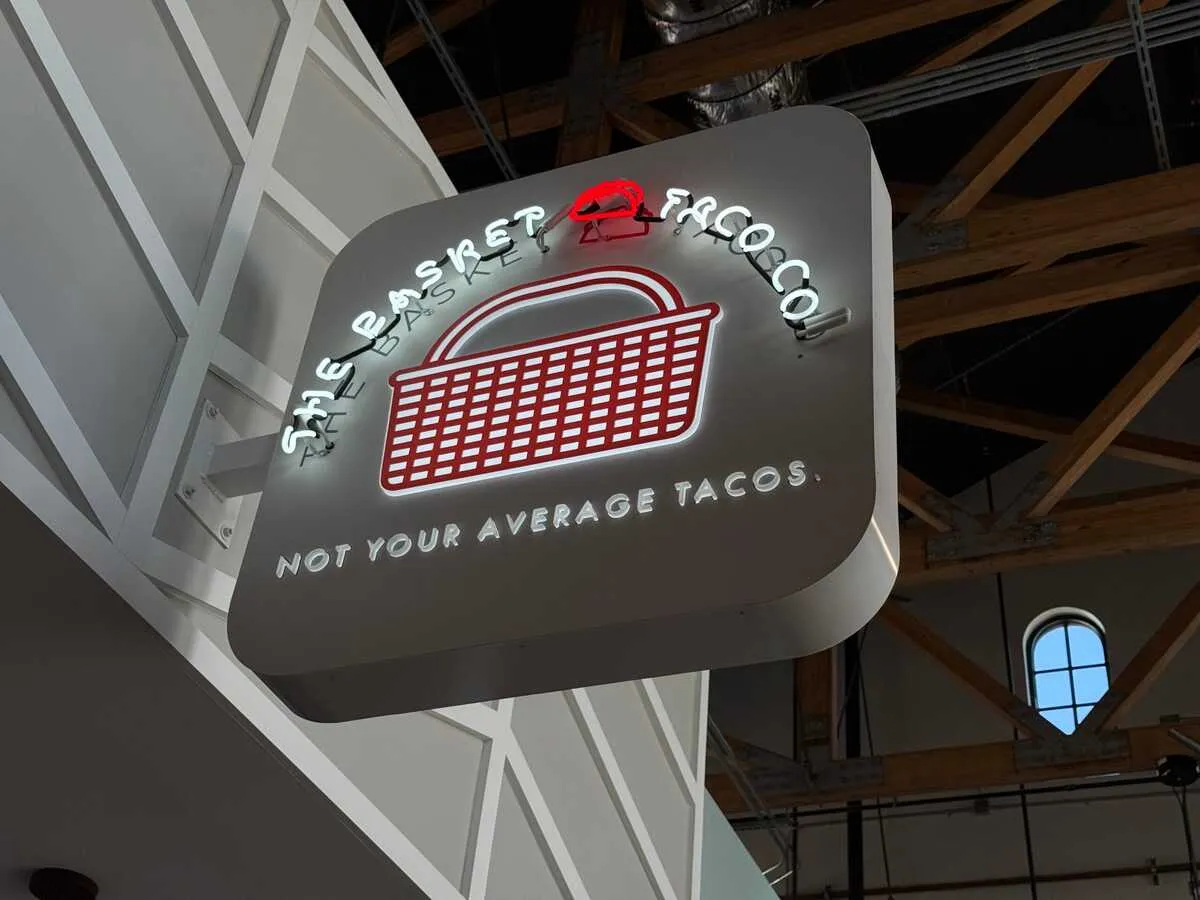
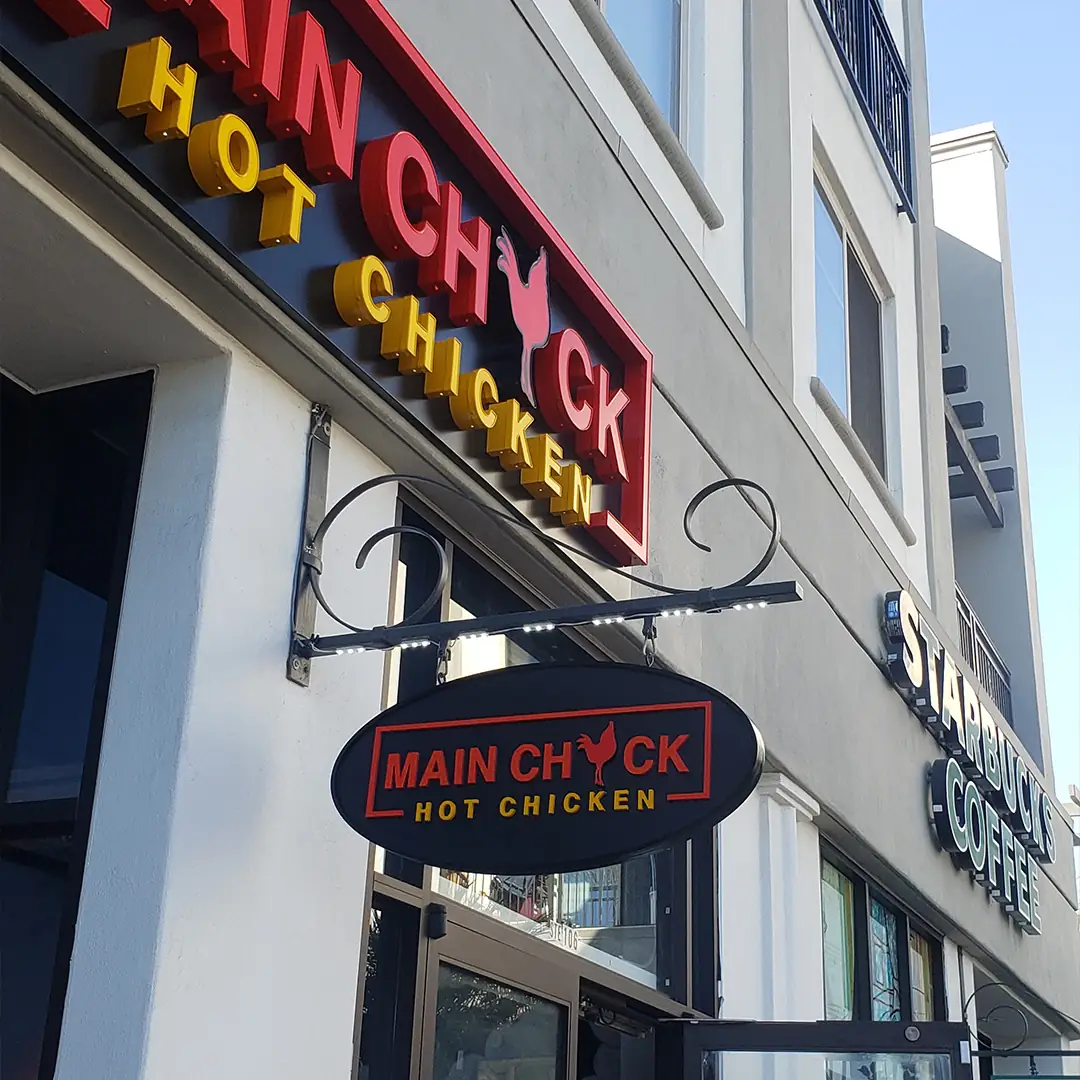
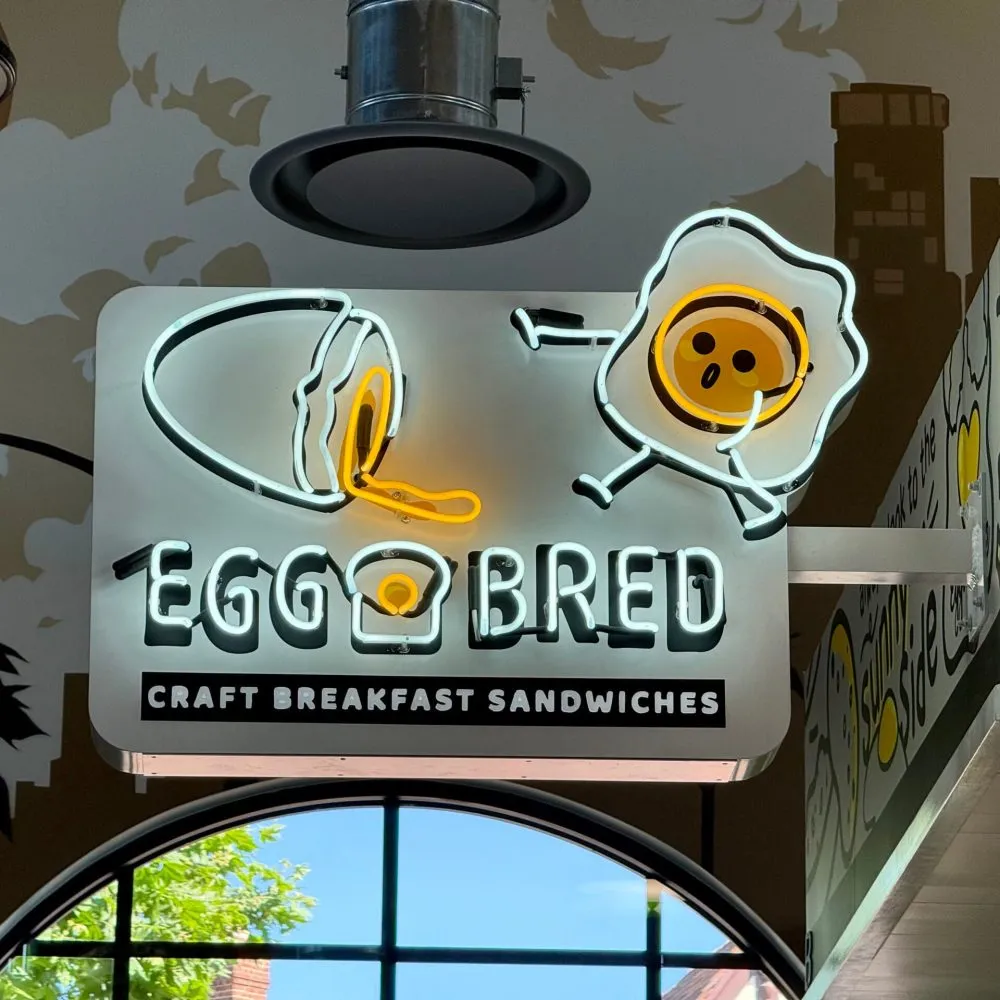
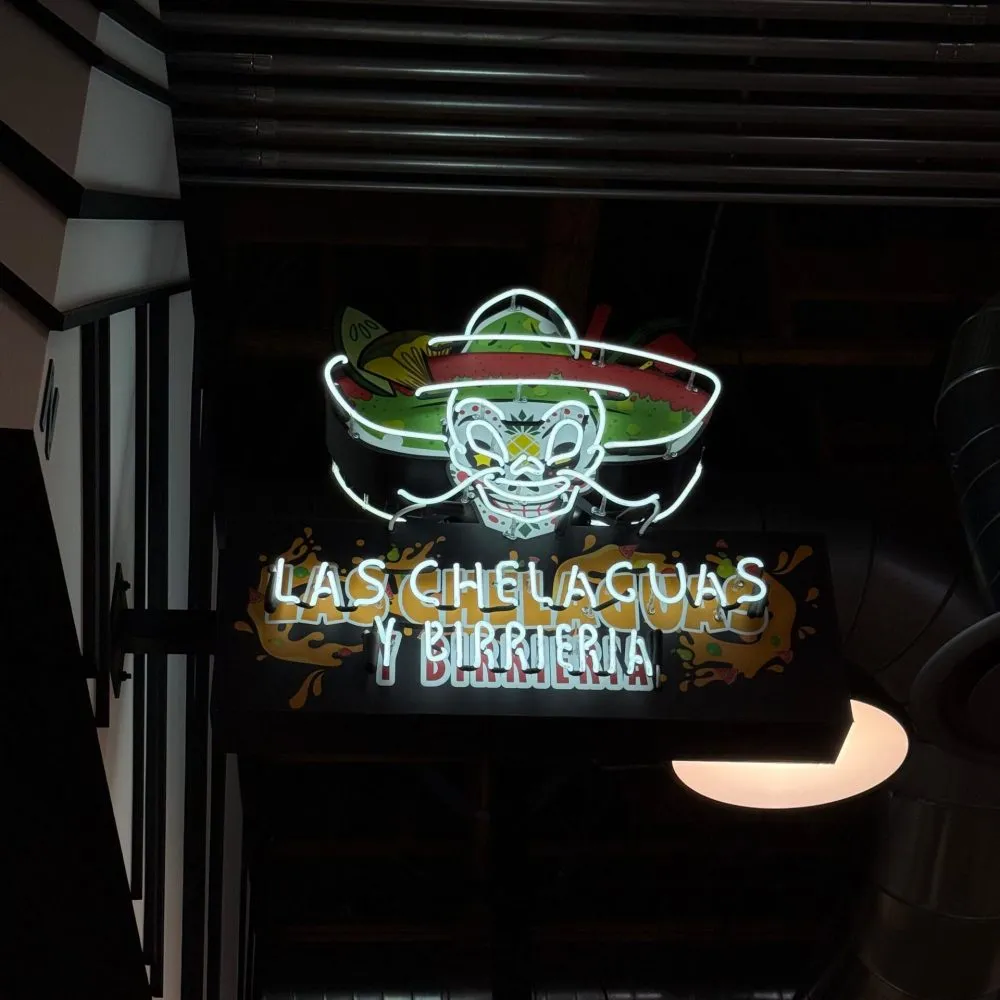
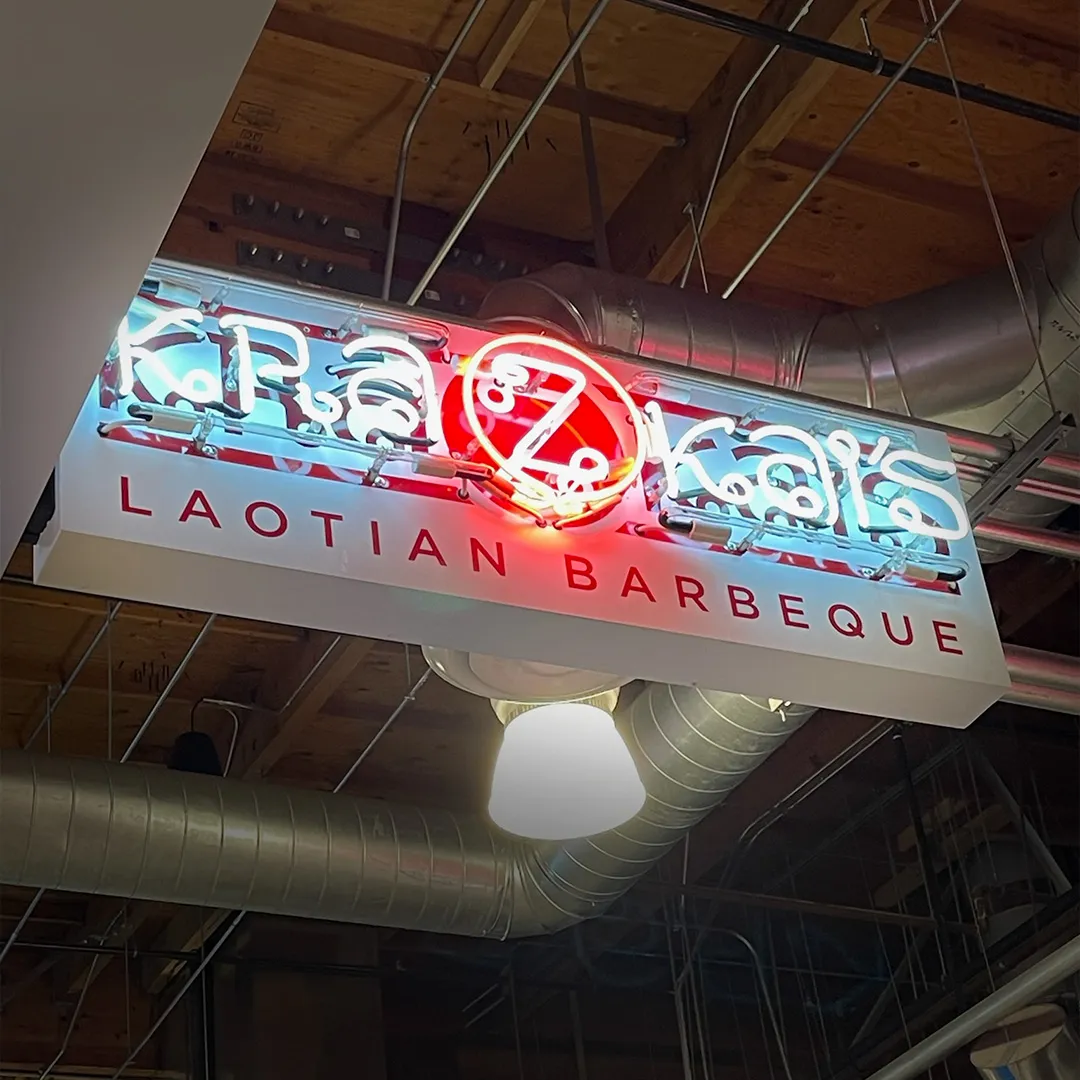
Blade signs fabricated and installed by Genius Signs — food-hall and street-front work. Every photo is a real job — no stock imagery.
Frequently Asked Questions
What are the mounting requirements for a blade sign?
Blade signs mount perpendicular to the building facade using a bracket system anchored into the wall structure. The wall must be structurally capable of supporting the sign weight plus wind loads. For masonry and concrete walls, we use expansion anchors or through-bolts. For wood-framed walls, we anchor into structural studs or install blocking. Most blade signs require a minimum clearance of 8 feet from the bottom of the sign to the sidewalk below, per local building codes. Our team assesses the wall structure and determines the appropriate mounting hardware for every installation.
Can blade signs be illuminated?
Yes. Blade signs can be illuminated using several methods. Internal LED illumination lights the sign from within, making the face glow through translucent acrylic or push-through graphics. External gooseneck lights or LED spotlights mounted above or below the sign illuminate the face without internal lighting. Halo-lit (backlit) blade signs create a glow behind the sign panel for a dramatic nighttime effect. LED edge lighting illuminates the perimeter of the sign. The best illumination method depends on the sign style, local codes, and the desired visual effect.
How much does a blade sign cost?
Pricing is case-by-case — final price depends on panel size, illumination type, bracket style, wall construction. Permits are a fixed $1,500 flat fee. Production itself runs 2–3 weeks once permits are approved; see the timeline above for the full project duration. See the pricing section above for full details, or request a free quote.
What are the size limits for blade signs in Los Angeles?
Blade sign size limits in Los Angeles are regulated by the municipal sign code and vary by zoning district. Generally, blade signs (called projecting signs in the code) are limited to 20 square feet per face in most commercial zones. The sign cannot project more than 5 feet from the building face or extend above the roofline. A minimum clearance of 8 feet above the sidewalk is required. Some specific plan areas like Old Town Pasadena or downtown LA districts have their own size regulations. We verify size limits for your specific property location before design and handle the full permit process.
Explore More Sign Options
Front Lit Channel Letters
The LA default for full facade signage — forward illumination readable from hundreds of feet, day or night.
Cabinet Signs & Light Boxes
Simpler single-panel wall signs with uniform internal illumination. Lower cost, faster install, flexible artwork.
Window Graphics
Vinyl lettering, frosted films, and full storefront graphic wraps — signage on the glass rather than above the sidewalk.
Neon Signs
Hand-bent glass neon for the authentic warm glow. Vintage craft with modern transformers and sealed electrodes.
Ready to start your project?
Free photoreal mockup on your actual facade — before you pay a dollar. Licensed C-45. Fabricated in Gardena, installed across Southern California.